Strengthening Islamic Financial Literacy among the Young Generation through Sustainable Management: Insights from a Literature-Based Analysis of Productive Waqf Participation
Keywords:
Islamic Financial Literacy, Productive Waqf, Sustainable Management, Young Generation, Financial EducationAbstract
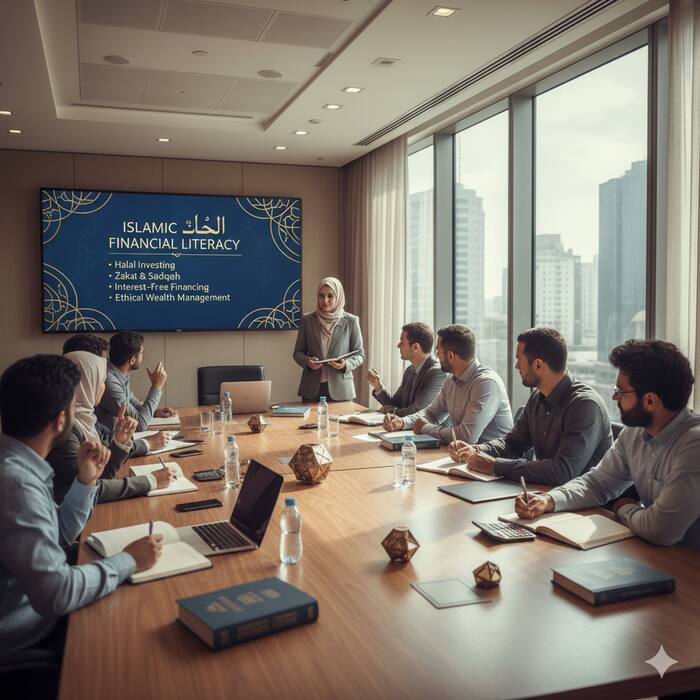
A complex global financial environment has never been more necessitated than in the current situation where strong financial literacy in all demographics is clearly lacking. This is not merely a traditional financial literacy need of the young generation in the Muslim communities, but it also goes into the Islamic financial literacy (IFL) that incorporates ethical and Shariah-compliant essence in making financial judgments. This paper provides more insights on the important role that IFL plays in young people, as well as how this engagement in productive waqf can help in transforming lives by providing financial literacy and providing communities with sustainable development tools. This paper will aim at offering its observation and reflection on the role that being involved in sustainable managed productive waqf programs can play in improving the Islamic financial literacy of the younger generations by leaps and bounds. Using a thorough desktop review of the available academic sources, this paper combines the previous research results of various academic studies dedicated to Islamic finance, waqf management, and financial education. The analysis demonstrates that productive waqf is an exclusive nature of living laboratory where the young people can acquire necessary knowledge in practical field of finance, develop the responsible approaches to finance, and learn of the Islamic consideration of economics in a practical way. The most notable outcomes should be considered the need to incorporate learning aspects on waqf projects, build trust by means of responsible management, and use contemporary technology to encourage youthful participation in it. The paper then ends with the recommendations to the waqf institutions and the propositions in future research to bring the gap between the theoretical knowledge of IFL into context out of influence participation in productive waqf.
Downloads
Downloads
 PDF
PDF
Published
Issue
Section
License
Copyright (c) 2025 Rahmawati Mohd Yusoff, Mohammad Hidir Baharudin, Hardy R. Hermawan , Marini Mohd Yusoff, Nor Hasanah Mohd Yusoff (Author)

This work is licensed under a Creative Commons Attribution-ShareAlike 4.0 International License.