A Quasi-Experimental Study of Reproductive Health Education in Reducing Juvenile Delinquency and Enhancing Adolescent Risk Behavior Control, Pidie Regency in 2025
Keywords:
Reproductive health education, Juvenile delinquency, Adolescent behavior, Decision-Making SkillsAbstract
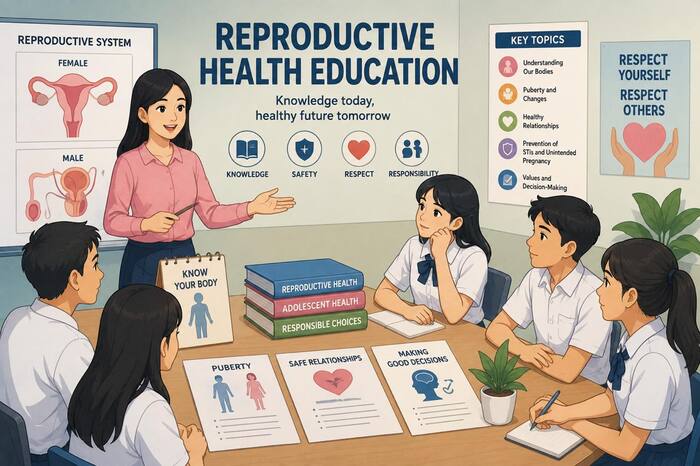
Adolescent risk behaviors, including juvenile delinquency and poor behavioral self-regulation, remain a significant public health concern in low- and middle-income countries, where access to structured reproductive health education is still limited. This study evaluated the effectiveness of reproductive health education in reducing juvenile delinquency and improving adolescent risk behavior control in Pidie Regency, Indonesia, in 2025. A quasi-experimental design with a non-equivalent control group and pretest–posttest approach was conducted involving 140 adolescents (n = 70 intervention; n = 70 control). The intervention group received structured reproductive health education emphasizing knowledge enhancement, decision-making skills, self-regulation, and peer resistance, while the control group received standard school-based health education. Results indicated a significant improvement in reproductive health knowledge in the intervention group (pretest: 56.8 ± 10.4; posttest: 78.6 ± 9.2) compared to the control group (57.2 ± 10.1 to 60.8 ± 9.8; p < 0.001; d = 0.78). Juvenile delinquency scores decreased significantly in the intervention group (42.5 ± 8.7 to 31.2 ± 7.9) relative to minimal change in the control group (41.9 ± 8.5 to 40.1 ± 8.2; p < 0.001; d = 0.72). Risk behavior control improved substantially in the intervention group (55.4 ± 9.6 to 74.8 ± 8.7) compared with the control group (56.1 ± 9.4 to 59.3 ± 9.1; p < 0.001; d = 0.81). Follow-up findings showed partial retention of intervention effects. The findings suggest that structured reproductive health education effectively improves cognitive outcomes and behavioral regulation while reducing delinquent tendencies among adolescents.
Downloads
Downloads
 PDF
PDF
Published
Issue
Section
License
Copyright (c) 2026 Idawati, Silvia Nova, Cut Linar, Yuliana, Peny Ariani (Author)

This work is licensed under a Creative Commons Attribution-ShareAlike 4.0 International License.